
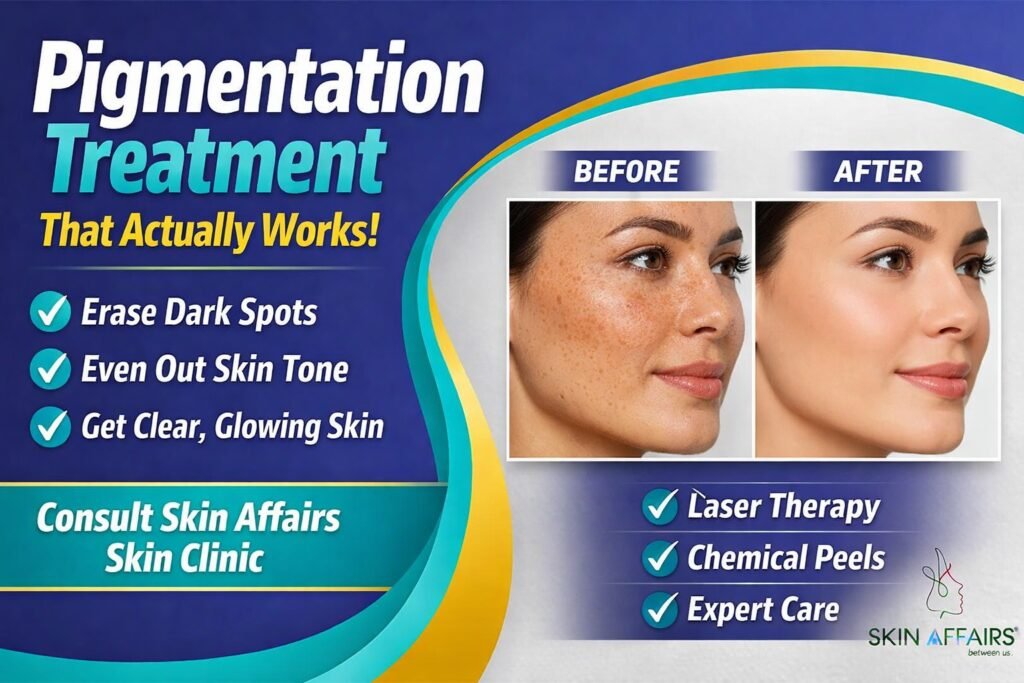
Skin Pigmentation : Why Home Remedies Like Sandalwood Don’t Work
Pigmentation and dark spots are one of the most common skin concerns affecting both men and women. Many people try natural remedies such as sandalwood, turmeric, lemon, or aloe vera hoping to achieve clear skin. While these ingredients may soothe or temporarily brighten the skin, they are not effective pigmentation treatment solutions.
Real pigmentation forms deep within the skin layers, and home remedies cannot penetrate that deeply. If you are struggling with dark spots, melasma, or uneven skin tone, understanding the right pigmentation treatments options is essential.
In this article, we explain why natural remedies fail and what science-based treatments actually work.
Table of Contents
- What Is Skin Pigmentation
- Why Sandalwood Cannot Treat Pigmentation
- Causes of Skin Pigmentation
- Best Dermatologist-Approved Pigmentation Treatment Options
- Laser Pigmentation Treatment
- Chemical Peels for Pigmentation
- Preventing Pigmentation from Returning
- When to See a Skin Specialist
What Is Skin Pigmentation
Skin pigmentation occurs when excess melanin (the pigment that gives skin its color) accumulates in certain areas of the skin. This results in dark patches or spots known as hyperpigmentation.
Common types include:
- Melasma
- Sun spots
- Post-inflammatory pigmentation
- Age spots
Because melanin production occurs deep in the skin layers, effective pigmentation treatment must target these deeper levels.
Why Sandalwood Cannot Treat Pigmentation
Sandalwood is often recommended in traditional skincare for its soothing and cooling properties. It may calm irritated skin and reduce redness, but it cannot remove deep pigmentation.
What Sandalwood Can Do
✔ Calm irritated skin
✔ Provide temporary brightness
✔ Reduce mild inflammation
What Sandalwood Cannot Do
Remove deep melanin deposits
Treat melasma or stubborn dark spots
Permanently cure pigmentation
Since sandalwood works only on the surface of the skin, it cannot replace professional pigmentation treatments.
Causes of Skin Pigmentation
Understanding the cause is crucial before starting any pigmentation treatments.
Sun Exposure
UV rays trigger melanin production, leading to sunspots and uneven skin tone.
Hormonal Changes
Conditions like melasma often occur due to pregnancy, birth control pills, or hormonal imbalance.
Acne and Skin Inflammation
Post-inflammatory pigmentation develops after acne or skin injuries.
Aging
Over time, melanin distribution becomes uneven, leading to dark patches.
Genetics
Some people are more prone to pigmentation due to their skin type.
Best Dermatologist-Approved Pigmentation Treatment Options
Modern dermatology offers several effective pigmentation treatment options that target the root cause.
Medical Skincare
Dermatologists may prescribe creams containing:
- Retinoids
- Vitamin C
- Azelaic acid
- Hydroquinone
These ingredients help regulate melanin production and gradually lighten dark spots.
Laser Pigmentation Treatment
Laser therapy is one of the most advanced pigmentation treatment methods available today.
Laser treatments work by breaking down melanin deposits in the deeper layers of the skin.
Benefits include:
✔ Faster results
✔ Even skin tone
✔ Minimal downtime
✔ Safe when performed by experts
Popular laser technologies include Pico Laser and Q-Switched Laser, widely used for pigmentation correction.
Chemical Peels for Pigmentation
Chemical peels are another effective pigmentation treatment option.
These treatments remove damaged skin layers and promote new, healthy skin growth.
Types of peels include:
- Glycolic acid peels
- Salicylic acid peels
- Lactic acid peels
Regular sessions help fade dark spots and improve overall skin tone.
Preventing Pigmentation from Returning
Even after successful pigmentation treatment, prevention is essential.
Always Use Sunscreen
A broad-spectrum SPF 30 or higher is crucial to prevent new pigmentation.
Avoid Excess Sun Exposure
Use hats, sunglasses, and protective clothing.
Follow a Proper Skincare Routine
Using dermatologist-recommended skincare helps maintain results.
When to See a Skin Specialist
If you notice:
- Persistent dark patches
- Uneven skin tone
- Pigmentation that does not fade
it is best to consult a qualified dermatologist.
Professional pigmentation treatment can accurately diagnose the cause and provide customized solutions.
Get Expert Pigmentation Treatment
Home remedies may provide temporary relief, but they cannot treat the root cause of pigmentation.
Calm skin
Cure pigmentation
Trust science-based dermatology treatments for safe and effective results.
Consult skin experts at Skin Affairs Skin Clinic for advanced pigmentation treatment and personalized skincare solutions.
