
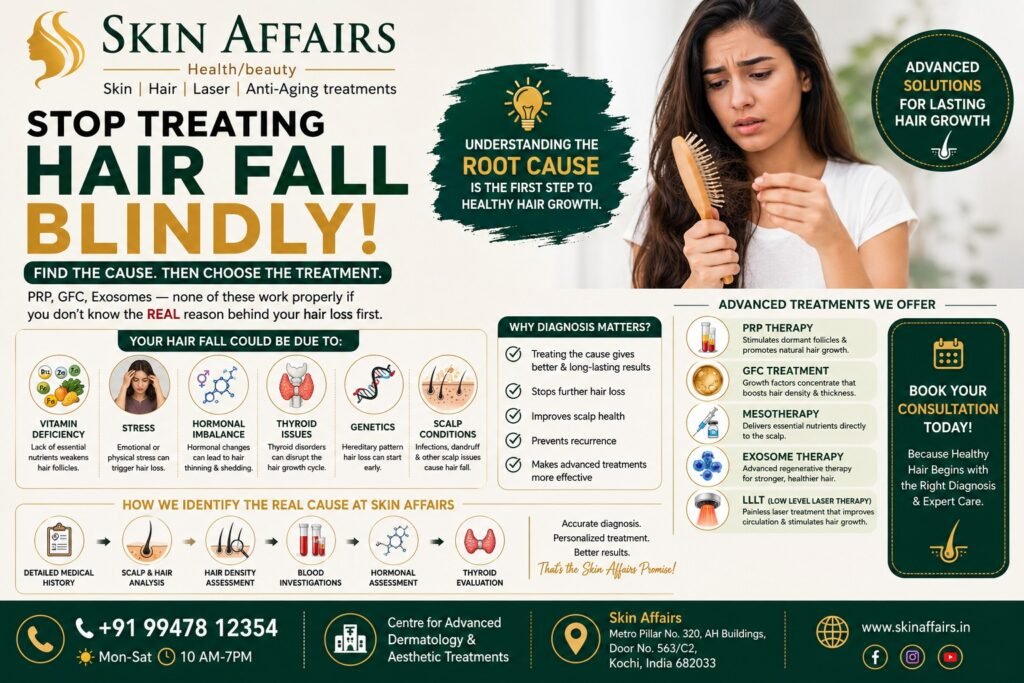
Hair Fall Causes: Why Finding the Root Cause Matters Before Treatment
Hair Fall Causes should always be identified before starting any treatment. Many people rush into PRP, GFC, Exosome Therapy, or Mesotherapy hoping for quick results. However, even the most advanced treatments may not work effectively if the real reason behind your hair loss remains untreated.
At Skin Affairs, we believe that successful hair restoration begins with understanding the underlying Hair Fall Causes. A detailed scalp and medical evaluation helps identify what’s triggering your hair loss, allowing us to create a personalized treatment plan that delivers better and longer-lasting results.
Why Understanding Hair Fall Causes is Important
Hair loss is not a disease by itself. It is often a symptom of an underlying condition. While treatments like PRP, GFC, Mesotherapy, and Exosome Therapy can stimulate hair growth, they may not provide optimal results unless the root cause is addressed.
Understanding the actual Hair Fall Causes helps:
- Prevent further hair loss
- Improve treatment outcomes
- Restore scalp health
- Promote healthier hair growth
- Reduce the risk of recurrence
Common Hair Fall Causes
Several factors can contribute to excessive hair shedding and thinning. The most common Hair Fall Causes include:
✔ Vitamin deficiencies
✔ Stress and anxiety
✔ Hormonal imbalance
✔ Thyroid disorders
✔ Genetic predisposition
✔ Scalp infections and conditions
Let’s explore each cause in detail.
Vitamin Deficiency as a Hair Fall Cause
Hair follicles require proper nutrition to function effectively. Deficiencies in essential nutrients can weaken hair roots and slow hair growth.
Important Nutrients for Healthy Hair
- Iron
- Vitamin D
- Vitamin B12
- Zinc
- Protein
- Biotin
When these nutrients are insufficient, hair follicles may enter the shedding phase prematurely.
Symptoms
- Increased hair shedding
- Weak and brittle hair
- Slow hair growth
- Hair thinning
Addressing nutritional deficiencies is often the first step in treating Hair Fall Cause linked to poor diet.
Stress-Related Hair Fall Causes
Stress is one of the most overlooked Hair Fall Cause. Physical or emotional stress can disrupt the normal hair growth cycle.
Common Stress Triggers
- Work pressure
- Lack of sleep
- Illness
- Surgery
- Emotional trauma
Stress-induced hair loss is commonly known as Telogen Effluvium, where a large number of hair follicles enter the resting phase simultaneously.
Managing stress levels can significantly improve hair health.
Hormonal Imbalance and Hair Fall Causes
Hormones play a crucial role in regulating hair growth.
Common Hormonal Conditions
- Polycystic Ovary Syndrome (PCOS)
- Menopause
- Pregnancy-related changes
- Testosterone imbalance
Hormonal fluctuations can shrink hair follicles and reduce hair density over time.
Proper diagnosis is essential before selecting any hair loss treatment.
Thyroid Disorders as Hair Fall Causes
The thyroid gland regulates many body functions, including hair growth.
Both hypothyroidism and hyperthyroidism can contribute to excessive hair shedding.
Warning Signs
- Diffuse hair thinning
- Fatigue
- Weight changes
- Dry skin
- Mood fluctuations
A simple blood test can help identify thyroid-related Hair Fall Causes.
Genetic Hair Fall Causes
Genetics remain one of the leading Hair Fall Causes worldwide.
Male Pattern Hair Loss
Characterized by:
- Receding hairline
- Crown thinning
- Progressive hair loss
Female Pattern Hair Loss
Characterized by:
- Widening hair part
- Reduced hair density
- Diffuse thinning
Early diagnosis can help slow progression and preserve existing hair.
Scalp Conditions That Cause Hair Fall
A healthy scalp is essential for healthy hair growth.
Several scalp disorders can contribute to Hair Fall Causes, including:
- Dandruff
- Seborrheic dermatitis
- Psoriasis
- Fungal infections
- Folliculitis
Treating scalp conditions often leads to significant improvement in hair growth.
Why Treatments Fail Without Diagnosing Hair Fall Causes
Many patients invest in advanced procedures without understanding why they are losing hair.
Common Mistakes
❌ Starting PRP without blood investigations
❌ Ignoring vitamin deficiencies
❌ Overlooking hormonal issues
❌ Treating symptoms instead of causes
❌ Self-medicating without expert advice
Without identifying Hair Fall Causes, treatment results may be disappointing or temporary.
How Skin Affairs Identifies Hair Fall Causes
At Skin Affairs, our specialists perform comprehensive assessments to uncover the exact reason behind hair loss.
Our Diagnostic Process
- Detailed medical history
- Scalp examination
- Hair density analysis
- Blood investigations
- Hormonal assessment
- Thyroid evaluation
This allows us to develop a personalized treatment plan tailored to your specific Hair Fall Causes.
Choosing the Right Treatment After Diagnosis
Once the underlying Hair Fall Causes are identified, we may recommend:
PRP Therapy
Stimulates dormant hair follicles using growth factors from your own blood.
GFC Treatment
Provides concentrated growth factors for hair regeneration.
Mesotherapy
Delivers vitamins and nutrients directly into the scalp.
Exosome Therapy
Promotes advanced follicular repair and regeneration.
Lifestyle and Nutritional Support
Addresses deficiencies and systemic causes of hair loss.
Conclusion
Hair Fall Causes should never be ignored. PRP, GFC, Mesotherapy, and Exosome Therapy can provide excellent results, but only when the underlying cause is accurately identified and treated.
At Skin Affairs, we focus on finding the root cause first, then selecting the most effective treatment plan for lasting hair restoration.
Don’t treat hair fall blindly. Find the cause. Then choose the treatment.
