
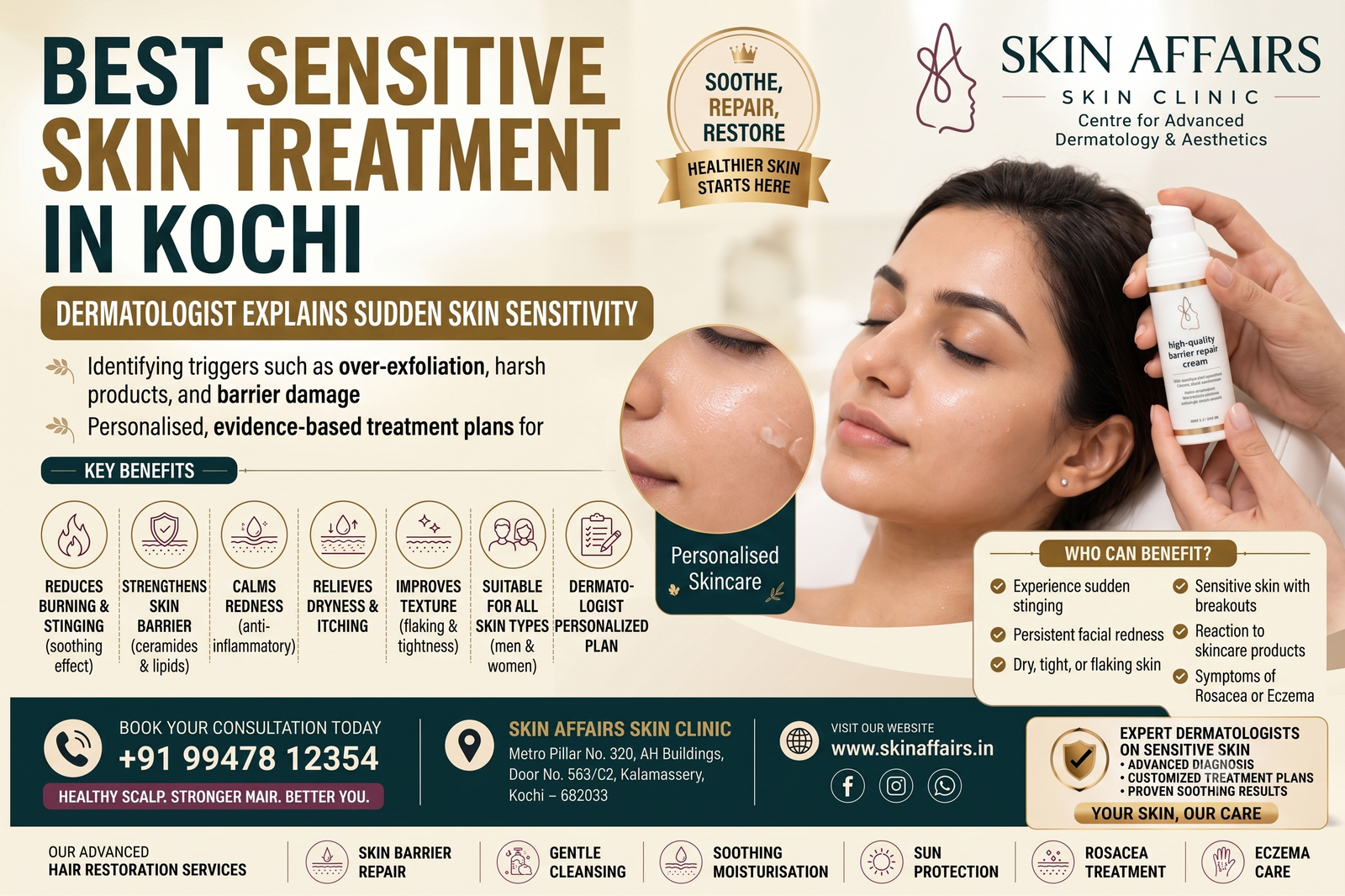
Sensitive Skin Treatment is becoming increasingly important as more people experience burning, redness, dryness, and irritation after using skincare products. One of the most common concerns we hear in the clinic is, “Doctor, products I’ve used for years suddenly sting my skin. What changed?”
In many cases, the problem isn’t the product itself—it’s that the skin’s protective barrier has been weakened. Environmental factors, harsh skincare routines, over-exfoliation, and even stress can all contribute to increased skin sensitivity.
The good news is that with the right diagnosis and a personalised treatment plan, sensitive skin can often be managed effectively.
Table of Contents
What Is Sensitive Skin?
Sensitive skin is a condition where the skin reacts more easily to external triggers than normal skin.
People with sensitive skin may experience:
- Burning
- Stinging
- Redness
- Itching
- Dryness
- Tightness
- Flaking
While sensitive skin isn’t always a medical condition on its own, it can also be associated with eczema, rosacea, allergic reactions, or a damaged skin barrier.
Understanding the cause is essential before starting any Sensitive Skin Treatment.
Why Does Skin Suddenly Become Sensitive?
Several factors can weaken your skin’s natural defence system.
Common causes include:
- Overusing exfoliating acids
- Excessive retinol use
- Harsh face cleansers
- Frequent face washing
- Hot showers
- Sun damage
- Pollution
- Weather changes
- Stress
- Allergic reactions
Sometimes, combining too many skincare products can do more harm than good.
7 Signs You Need Sensitive Skin Treatment
1. Your Moisturiser Burns
A moisturiser should soothe your skin—not sting it.
If products that once felt comfortable now cause burning, your skin barrier may be compromised.
2. Constant Redness
Persistent redness without an obvious cause often indicates underlying inflammation.
3. Dry, Tight Skin
Skin that constantly feels dry despite moisturising may need professional evaluation.
4. Products Suddenly Stop Working
Many patients notice that their favourite skincare products suddenly begin causing irritation.
5. Itching Throughout the Day
Ongoing itching is often a sign that the skin barrier needs repair.
6. Frequent Breakouts
Inflamed skin can sometimes develop acne-like bumps even when acne wasn’t previously an issue.
7. Increased Sensitivity to Weather
If your skin reacts strongly to sunlight, cold air, or humidity, it’s worth consulting a dermatologist.
Common Mistakes That Make Skin Worse
Many people unintentionally worsen sensitive skin by:
- Trying multiple skincare products at once
- Scrubbing the skin aggressively
- Using DIY home remedies
- Following social media skincare trends without guidance
- Ignoring sunscreen
Healthy skin isn’t achieved by using more products. It’s achieved by using the right products consistently.
Dermatologist-Recommended Sensitive Skin Treatment
Treatment depends on the underlying cause.
A dermatologist may recommend:
Gentle Cleansing
Using a mild, fragrance-free cleanser helps remove dirt without stripping the skin’s natural oils.
Barrier Repair Moisturisers
Moisturisers containing ceramides, glycerin, hyaluronic acid, and panthenol help strengthen the skin barrier.
Sun Protection
Daily sunscreen protects sensitive skin from UV damage and prevents further irritation.
Personalised Skincare
Every patient’s skin is different. A personalised routine is often more effective than copying trends or using multiple products.
Professional Evaluation
If symptoms continue despite proper skincare, a dermatologist can determine whether conditions such as eczema, rosacea, or allergic dermatitis are contributing to your symptoms.
When Should You Visit a Dermatologist?
You should seek medical advice if:
- Redness lasts more than two weeks
- Burning continues despite changing products
- Your skin becomes increasingly dry or painful
- Over-the-counter products don’t help
- You experience repeated flare-ups
Early treatment often prevents long-term skin damage.
Why Choose Skin Affairs?
At skinaffairs.in, our dermatologists focus on identifying the root cause of skin sensitivity rather than simply treating the symptoms.
Every consultation includes a detailed assessment of your skin type, skincare routine, lifestyle, and medical history. This allows us to recommend evidence-based treatments tailored specifically to your skin’s needs.
Whether your symptoms are caused by a damaged skin barrier, eczema, rosacea, or allergies, our goal is to restore healthy skin through safe, personalised dermatological care.
Frequently Asked Questions
Can sensitive skin become normal again?
Yes. In many cases, once the underlying cause is identified and treated, the skin barrier can recover and symptoms improve significantly.
Can over-exfoliation damage my skin?
Yes. Excessive exfoliation is one of the most common causes of skin barrier damage and increased sensitivity.
Should I stop using all skincare products?
Not necessarily. A dermatologist can help simplify your routine and recommend products that support healing rather than irritation.
Final Thoughts
Experiencing burning, redness, or irritation doesn’t always mean your skin is permanently damaged. Often, it’s your skin’s way of signalling that it needs care and protection.
If you’re experiencing ongoing sensitivity, seeking professional advice early can help prevent complications and restore your skin’s natural health.
