
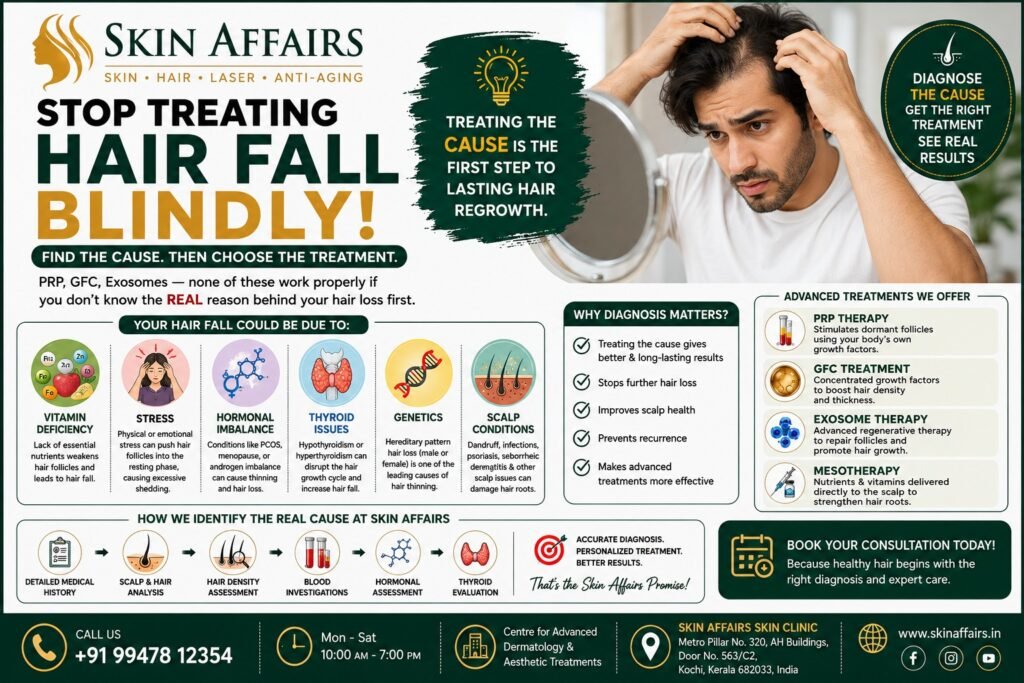
Hair Fall Causes: Why Identifying the Root Cause Is Essential Before Treatment
Hair Fall Causes should always be identified before starting any hair loss treatment. Many people rush into advanced procedures like PRP, GFC, Mesotherapy, or Exosome Therapy hoping for quick results. However, even the most advanced treatments may fail if the underlying Hair Fall Cause are not properly diagnosed.
At Skin Affairs, we believe successful hair restoration begins with understanding the real reason behind hair loss. Once the exact Hair Fall Cause are identified, treatment becomes more effective, personalized, and long-lasting.
Why Understanding Hair Fall Causes Matters
Hair loss is often a symptom rather than the actual problem. The visible shedding you notice may be linked to nutritional deficiencies, hormonal changes, stress, or scalp disorders.
Understanding Hair Fall Causes helps:
- Prevent ongoing hair loss
- Improve treatment success
- Strengthen hair follicles
- Restore scalp health
- Achieve longer-lasting results
The first step is always diagnosis, not treatment.
Common Hair Fall Causes
Several factors contribute to excessive hair fall.
The most common Hair Fall Causes include:
✔ Vitamin Deficiency
✔ Stress
✔ Hormonal Imbalance
✔ Thyroid Disorders
✔ Genetics
✔ Scalp Conditions
Let’s understand how each of these affects hair growth.
Vitamin Deficiency as a Hair Fall Cause
Healthy hair requires proper nutrition.
Deficiencies in essential nutrients such as:
- Iron
- Vitamin D
- Vitamin B12
- Zinc
- Protein
- Biotin
can weaken hair follicles and increase shedding.
Signs of Nutritional Hair Loss
- Excessive hair fall
- Brittle hair
- Slow hair growth
- Diffuse thinning
Correcting nutritional deficiencies often improves hair growth significantly.
Stress and Hair Fall Causes
Stress is one of the most overlooked Hair Fall Causes.
Physical or emotional stress can push hair follicles into the resting phase, leading to excessive shedding.
Common Stress Triggers
- Work pressure
- Emotional trauma
- Lack of sleep
- Illness
- Surgery
Stress-related hair loss is commonly known as Telogen Effluvium and can affect both men and women.
Hormonal Imbalance and Hair Fall Causes
Hormones play a major role in regulating hair growth.
Hormonal imbalance can cause progressive hair thinning.
Common Hormonal Conditions
- PCOS
- Menopause
- Postpartum changes
- Androgen imbalance
Without treating the hormonal issue, hair loss treatments may offer only temporary results.
Thyroid Disorders and Hair Fall Causes
The thyroid gland influences metabolism, skin health, and hair growth.
Both hypothyroidism and hyperthyroidism can contribute to significant hair loss.
Symptoms Associated With Thyroid Hair Loss
- Hair thinning
- Fatigue
- Weight fluctuations
- Dry skin
- Low energy
Blood investigations can help identify thyroid-related Hair Fall Causes.
Genetics and Hair Fall Cause
Genetics remain one of the leading Hair Fall Cause worldwide.
Male Pattern Hair Loss
Common signs include:
- Receding hairline
- Crown thinning
- Progressive hair loss
Female Pattern Hair Loss
Common signs include:
- Widening part line
- Reduced hair density
- Diffuse thinning
Early intervention can slow progression and preserve existing hair.
Scalp Conditions That Trigger Hair Fall Causes
A healthy scalp is essential for healthy hair growth.
Several scalp disorders can contribute to Hair Fall Cause:
- Dandruff
- Seborrheic dermatitis
- Psoriasis
- Folliculitis
- Fungal infections
Treating scalp disorders often leads to noticeable improvement in hair growth.
Why PRP, GFC and Exosome Treatments May Fail Without Diagnosing Hair Fall Cause
Many people begin advanced treatments without understanding the reason behind their hair loss.
Common Mistakes
❌ Starting PRP without blood tests
❌ Ignoring vitamin deficiencies
❌ Overlooking hormonal issues
❌ Missing thyroid abnormalities
❌ Neglecting scalp diseases
PRP, GFC, and Exosome Therapy can be highly effective, but only when Hair Fall Causes are accurately diagnosed and managed.
How Skin Affairs Diagnoses Hair Fall Causes
At Skin Affairs, we focus on identifying the root cause before recommending treatment.
Our Diagnostic Approach
- Detailed medical history
- Scalp examination
- Hair density assessment
- Blood investigations
- Hormonal evaluation
- Thyroid screening
This comprehensive approach helps us create a personalized treatment plan for every patient.
Choosing the Right Treatment After Identifying Hair Fall Causes
Once Hair Fall Causes are identified, treatment options may include:
PRP Therapy
Stimulates dormant hair follicles using growth factors from your own blood.
GFC Treatment
Provides concentrated growth factors to improve hair density and thickness.
Exosome Therapy
Advanced regenerative treatment that supports follicular repair.
Mesotherapy
Delivers essential nutrients directly into the scalp.
Lifestyle & Nutritional Correction
Addresses vitamin deficiencies and internal health factors.
The right treatment depends entirely on the underlying Hair Fall Causes.
Conclusion
Hair Fall Causes should never be ignored. PRP, GFC, Exosome Therapy, and other advanced treatments work best when the underlying cause is identified first.
Whether your hair loss is caused by vitamin deficiency, stress, hormonal imbalance, thyroid disorders, genetics, or scalp conditions, accurate diagnosis is the foundation of successful treatment.
Stop treating hair fall blindly. Find the cause. Then choose the treatment.
Visit Skin Affairs for a personalized hair and scalp assessment today.
